PLA Air Force Reveals Integrated Three-UAV Framework Featuring First Public Showing of GJ-3A, Delivering Cross-Service Intelligence Support

Summary
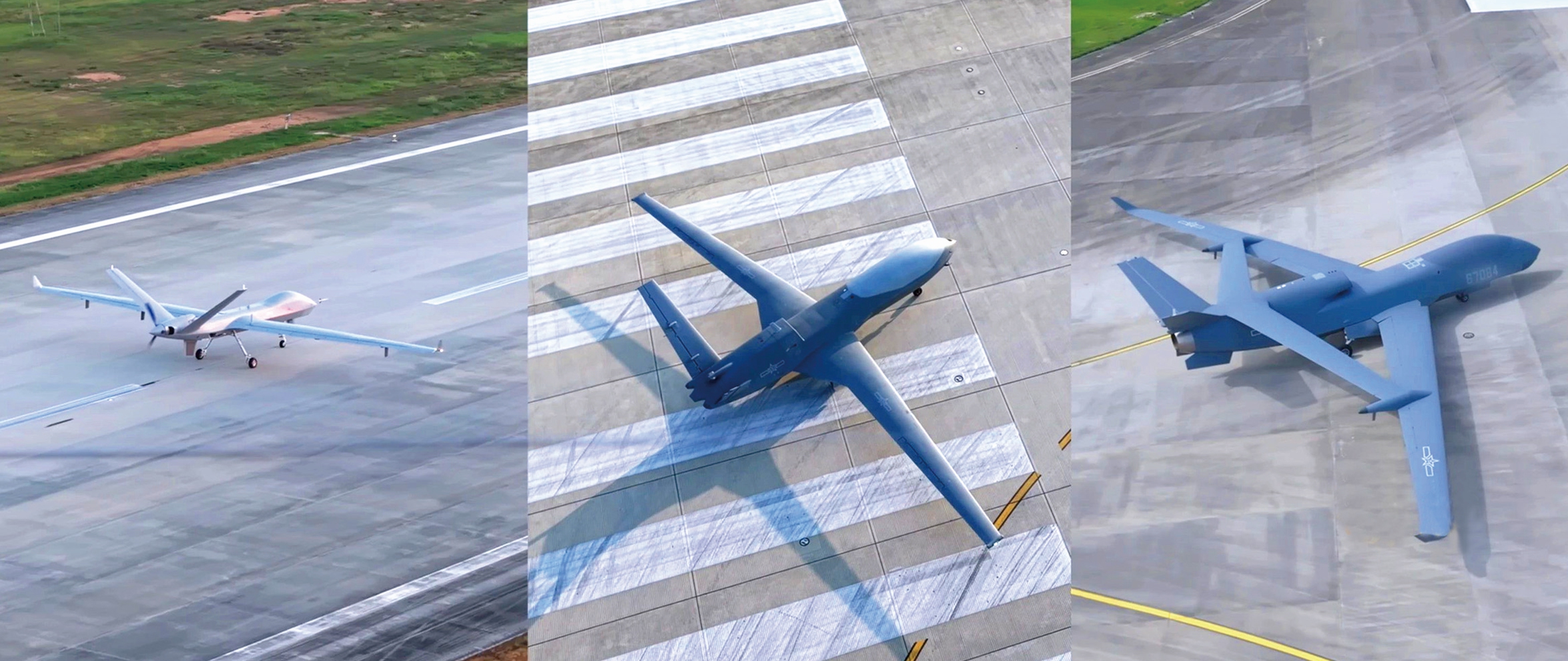
China's People's Liberation Army (PLA) Air Force has publicly showcased a coordinated three-drone system comprising the newly debuted GJ-3A armed reconnaissance drone, the WZ-10 reconnaissance drone, and the WZ-7 reconnaissance drone, designed to provide integrated intelligence support across the PLA Army, Navy, and Rocket Force. The footage, released through state media CCTV News as part of the final episode of the PLA documentary series "Zhisheng (Victory)," demonstrates how these UAVs function as interconnected terminals within China's broader military information network, effectively dissolving traditional inter-service boundaries to enable joint operations. The GJ-3A, making its first public appearance, is described as a medium-altitude, long-endurance UAV derived from the Wing Loong series but developed exclusively for domestic use, with an estimated maximum takeoff weight exceeding six tons, payload capacity surpassing two tons, and capabilities encompassing both air-to-ground strikes and air-to-air combat. In contrast, the WZ-10 and WZ-7 are high-altitude, long-endurance platforms, with the larger WZ-7 offering strategic-level reconnaissance capabilities, while the GJ-3A contributes tactical reconnaissance combined with strike capacity. Military analysts assert that this three-drone integration marks a significant advancement in China's unified tactical and strategic reconnaissance-strike architecture, reflecting the PLA's accelerating shift toward unmanned warfare systems.
Key Takeaways
- 1. **Cross-Service Integration:** The three-drone system is specifically designed to break down inter-service barriers, providing seamless intelligence support simultaneously to the PLA Army, Navy, and Rocket Force, signaling a major step toward fully integrated joint operations
- 2. **GJ-3A Capabilities Advancement:** The newly revealed GJ-3A represents a substantial upgrade over its Wing Loong predecessors, combining reconnaissance and strike roles with potential air-to-air combat capability — a notably expanded threat profile compared to conventional armed drones
- 3. **Strategic-Tactical Layering:** The combination of the strategically oriented WZ-7, the high-altitude WZ-10, and the tactically versatile GJ-3A suggests China has deliberately structured a tiered UAV ecosystem covering both strategic surveillance and tactical strike missions simultaneously
- 4. **Unmanned Warfare Prioritization:** The public unveiling through a dedicated PLA documentary series signals China's deliberate intent to publicize its unmanned warfare advancements, likely serving both domestic messaging and strategic deterrence purposes toward potential adversaries
- 5. **Accelerating UAV Development Trajectory:** The progressive evolution from GJ-1 to GJ-2 to GJ-3A demonstrates a rapid and systematic improvement cycle in China's military UAV program, suggesting continued near-term advancements in payload, endurance, and multi-domain combat capabilities