Saab Wins $1.04 Billion Contract for Two GlobalEye Surveillance Aircraft from Anonymous Middle Eastern Buyer

Summary
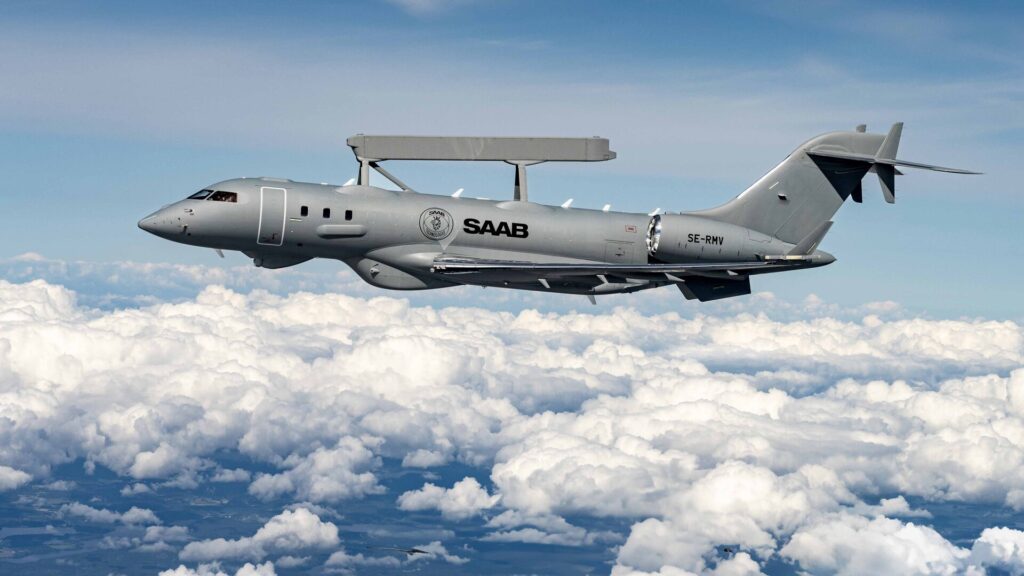
Swedish defence manufacturer Saab announced on 27 July 2026 a US$1.04 billion contract for two GlobalEye airborne early warning and control aircraft destined for an undisclosed Middle Eastern customer, with deliveries planned for 2030. The GlobalEye platform, built on a Bombardier Global 6000 airframe, is distinguished by its multi-domain surveillance capability integrating air, maritime, and land surveillance through a combination of the Erieye ER AESA radar, Seaspray maritime radar, and electro-optical/infrared sensors, offering detection ranges of approximately 550 kilometres and endurance exceeding 11 hours. This order is entirely separate from NATO's concurrent selection of GlobalEye to replace up to 14 E-3A Sentry aircraft across an 11-nation consortium, announced just weeks earlier on 7 July 2026, demonstrating strong simultaneous demand from both multilateral and bilateral customers. Saab's deliberate anonymity around the buyer carries historical precedent, as the company similarly withheld attribution on Saudi Arabia's earlier Saab 2000 Erieye purchase, and Saab's CEO has previously confirmed active sales campaigns in the Gulf, specifically citing Saudi Arabia and Qatar as nations that have expressed interest in GlobalEye. Given that Saudi Arabia operates ageing Boeing E-3 Sentries and has an existing Saab Erieye relationship, while Qatar lacks any confirmed AEW&C capability entirely, either nation represents a strategically plausible candidate for this acquisition.
Key Takeaways
- 1. **Growing GlobalEye Export Momentum:** With confirmed operators including the UAE, Sweden, and France, and now an anonymous Middle Eastern buyer, GlobalEye is rapidly establishing itself as the leading next-generation AEW&C platform in the global market, directly threatening Boeing's legacy E-3 Sentry franchise
- 2. **Gulf AEW&C Competition Intensifying:** Saudi Arabia and Qatar are the most credible candidate buyers, with Saudi Arabia facing a pressing fleet modernisation requirement given its ageing E-3 Sentry aircraft, while Qatar would be acquiring an entirely new strategic surveillance capability, representing different but significant defence implications for Gulf regional security dynamics
- 3. **NATO Selection Amplifies Export Appeal:** Saab's concurrent selection by an 11-nation NATO consortium to replace E-3A Sentries significantly boosts GlobalEye's international credibility and interoperability credentials, likely accelerating procurement interest from other US-aligned nations in the Middle East and beyond
- 4. **Multi-Domain Surveillance as a Strategic Differentiator:** GlobalEye's unique fusion of air, maritime, and land surveillance on a single platform addresses the increasingly complex threat environments faced by Gulf states, offering significant operational advantages over legacy single-domain AEW&C systems in contested maritime and littoral environments
- 5. **Saab's Middle East Strategy Maturing:** Saab's deliberate non-disclosure policy, consistent pricing in the US$500 million per aircraft range, and long-standing regional sales campaigns indicate a sophisticated and well-established Gulf market penetration strategy that positions the company to potentially secure additional orders from the broader MENA region