Ukrainian Firm SkyFall Introduces High-Speed P1-SUN JetKiller Drone Interceptor Designed to Neutralize Russia's Jet-Propelled Shahed Strike Drones

Summary
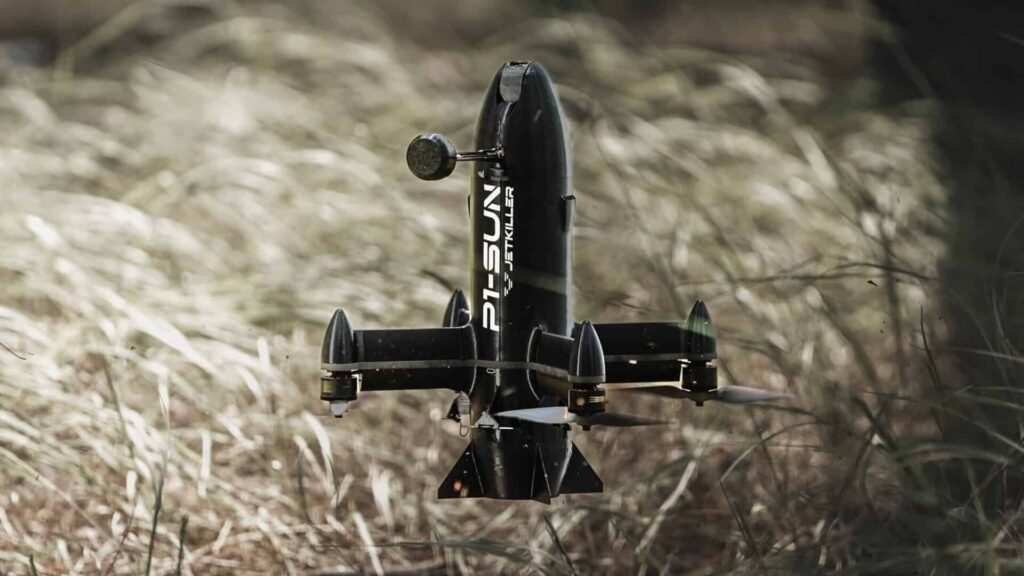
Ukrainian drone manufacturer SkyFall publicly revealed its P1-SUN JetKiller interceptor drone on July 20-21, 2026, specifically engineered to counter Russia's increasingly prevalent fleet of jet-powered Shahed-type strike drones. The JetKiller represents a significant performance upgrade over SkyFall's baseline P1-SUN model, achieving speeds of 370 km/h, an operational range of 30 kilometres, an altitude ceiling of 9,000 metres, and carrying a 500-gram warhead, guided by AI-based terminal targeting that reacts faster than human response times. The development was driven by a recognized tactical gap, as senior Ukrainian Air Force officials confirmed that 15-20% of Russia's current Shahed drone fleet now employs jet engines across variants such as the Geran-3, Geran-4, and Geran-5, capable of speeds between 300-600 km/h, rendering most propeller-driven interceptors ineffective. Russia has further complicated Ukraine's air defence challenge by deploying the S-8000 Banderol, a jet-powered munition cruising near 560 km/h with a substantial 114-kilogram warhead built around a Chinese-sourced turbojet engine. SkyFall reported that the JetKiller successfully destroyed over a dozen jet-powered Shahed drones during pre-production trials, positioning it as part of a broader Ukrainian strategic initiative to develop fully autonomous next-generation unmanned systems.
Key Takeaways
- 1. **Evolving Threat Landscape:** Russia's deliberate shift toward jet-powered strike drones represents a calculated tactical escalation, with jet-propelled variants now comprising 15-20% of Shahed strike packages and that proportion steadily rising, fundamentally challenging existing Ukrainian air defence architectures.
- 2. **Speed-Driven Interceptor Arms Race:** The JetKiller's development underscores a broader competitive dynamic in which propeller-driven interceptors are becoming strategically obsolete, forcing multiple Ukrainian manufacturers simultaneously to develop faster, jet-capable counter-drone platforms.
- 3. **AI Integration as a Force Multiplier:** The incorporation of AI-based terminal guidance enabling faster-than-human target acquisition signals a significant doctrinal shift toward autonomous engagement systems, reducing reliance on human operators in time-critical interception scenarios.
- 4. **Asymmetric Counter-Drone Economics:** Ukraine is pursuing cost-effective interceptor solutions against relatively inexpensive but increasingly sophisticated Russian drone threats, reflecting the broader economic dimension of modern drone warfare where defensive costs must remain proportional to offensive threats.
- 5. **Wider Ukrainian Defence Innovation Momentum:** The JetKiller reveal fits within a larger pattern of accelerated Ukrainian defence innovation, including the BARS jet loitering munition co-production with Germany, Lima electronic warfare systems, and new Gripen fighter acquisitions, demonstrating Ukraine's strategic push toward technological self-sufficiency and offensive-defensive capability balance.