Updates and Developments in Pakistan Army's Wheeled Armored Vehicle Acquisition Efforts

Summary
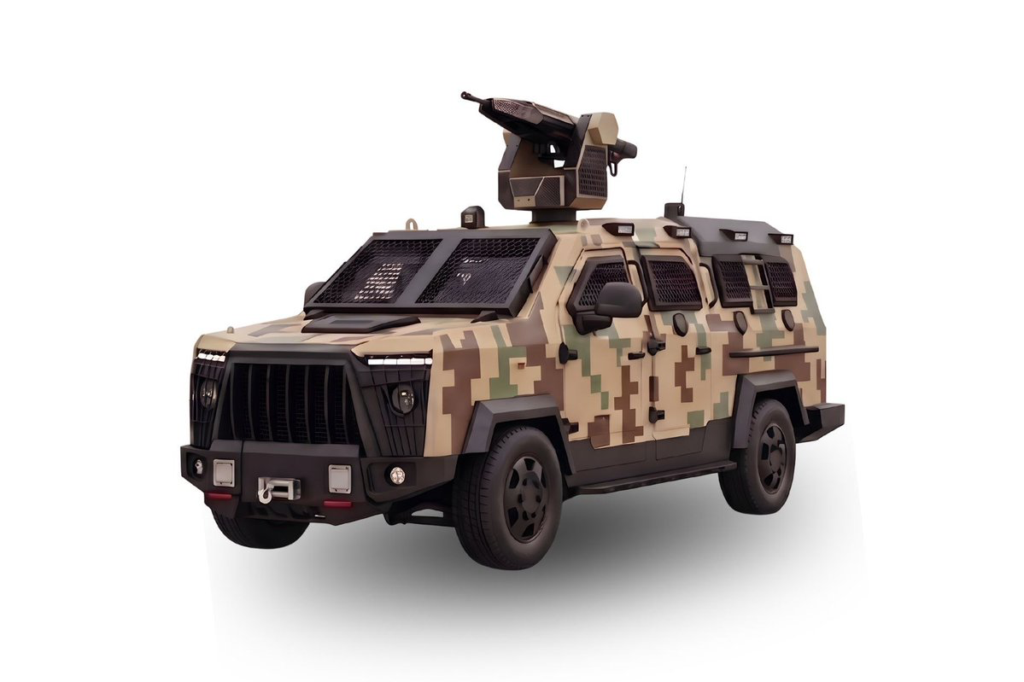
On July 17, 2026, Margalla Heavy Industries Limited (MHIL), the commercial arm of Heavy Industries Taxila (HIT), introduced the 'Liger,' a new 4×4 armoured security vehicle weighing 7,600 kg with a 2,000 kg payload capacity, capable of transporting up to 10 personnel and equipped with a remote weapon station mounting a 12.7 mm gun. The Liger joins an expanding portfolio of Pakistani wheeled armoured vehicles that includes HIT's Hisar MRAP and the Faaris 6×6 armoured fighting vehicle, and is marketed as a tactical mobility and rapid strike platform that could potentially replace pick-up trucks or legacy armoured vehicles like the HIT Muhafiz series. Despite its capabilities, it remains uncertain whether the Pakistan Army will formally adopt the Liger or other HIT/MHIL platforms, as the Army has historically struggled to procure wheeled armoured vehicles in significant numbers since the counterinsurgency campaigns of the early-to-mid-2010s. However, ongoing counterinsurgency and counter-terrorism operations in Balochistan and the volatile Khyber-Pakhtunkhwa province may create renewed urgency and operational demand for new wheeled armoured vehicle acquisitions. The situation highlights both the growing domestic defence manufacturing ambitions of Pakistan and the persistent gap between industrial capability and actual military procurement decisions.
Key Takeaways
- 1. Pakistan's domestic defence industry is expanding its wheeled armoured vehicle portfolio, with MHIL's Liger representing the latest attempt to offer locally developed solutions to the Pakistan Army
- 2. The Pakistan Army has historically faced significant procurement challenges in acquiring wheeled armoured vehicles at scale, despite multiple tenders and evaluation processes since post-2010s COIN operations
- 3. Active counterinsurgency and counter-terrorism operations in Balochistan and Khyber-Pakhtunkhwa present a strategic driver that could accelerate procurement decisions across multiple armoured vehicle categories
- 4. The Liger's design specifications — including RWS capability, all-terrain performance, and B-6 ballistic protection — suggest it is tailored for low-to-medium intensity conflict environments rather than conventional high-intensity warfare
- 5. The relationship between HIT and its commercial wing MHIL signals a broader Pakistani strategy to commercialize and potentially export domestically developed defence platforms, reducing dependence on foreign armoured vehicle suppliers