Collaborative Search and Rescue Mission Demonstrates China's Commitment to Regional Maritime Security and Humanitarian Support

Summary
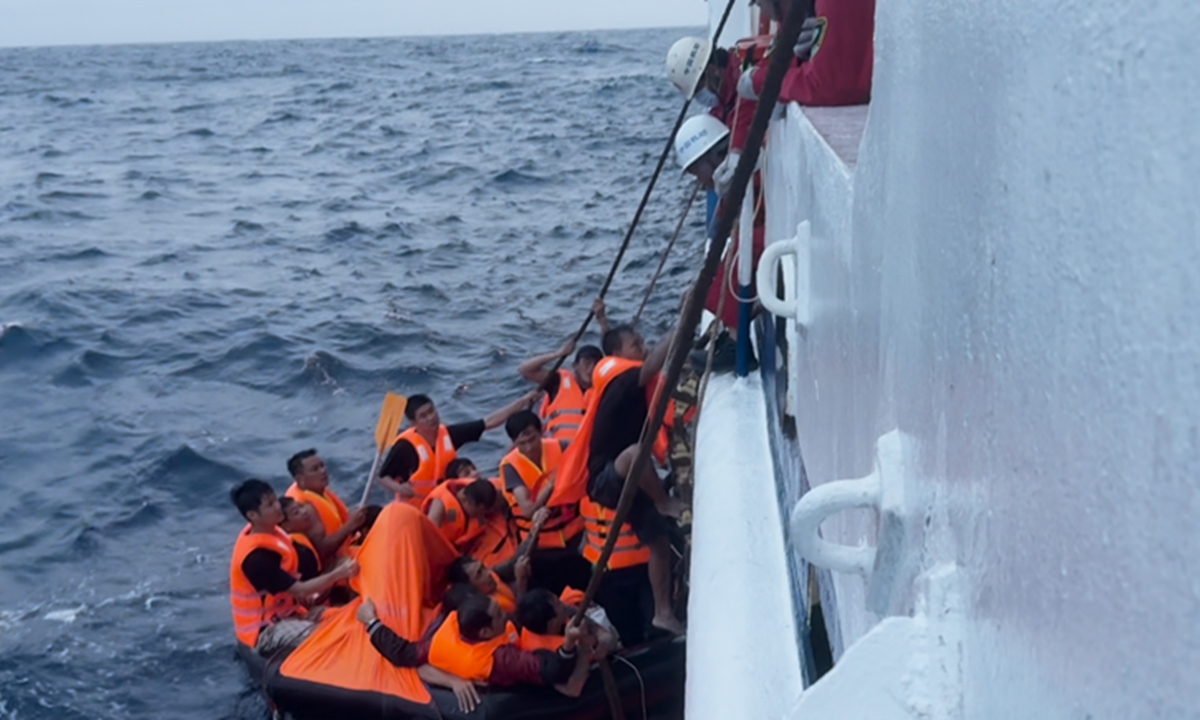
On July 25, a Vietnamese vessel, the KHOI NGUYEN 18, sank in waters near Yongshu Reef in the Nansha Islands after encountering distress, with 62 Vietnamese nationals on board requiring urgent assistance. China responded swiftly by deploying six vessels and one rescue helicopter, with the Chinese rescue vessel Nanhai Jiu 115 serving as the on-site commander after it initially spotted a life raft and rescued 29 Vietnamese nationals while returning to Sanya. A joint unified search and rescue command system was established between China and Vietnam, incorporating a three-level command linkage mechanism involving provincial, city, and district levels, alongside seven Vietnamese ships participating in the operation. As of Sunday evening, 45 people had been successfully rescued, with 41 already transferred to Vietnamese vessels and the remaining four scheduled for transfer the following day. The operation demonstrated strong bilateral coordination and regional maritime cooperation, with Chinese authorities framing the effort as evidence of China's role in providing maritime public goods to the broader region.
Key Takeaways
- 1. **Strategic Soft Power Projection:** China is leveraging this rescue operation to reinforce its narrative as a responsible regional maritime power and provider of humanitarian public goods in contested South China Sea waters
- 2. **Operational Capability Demonstration:** The deployment of multiple vessels, a rescue helicopter, and a structured three-level command mechanism showcases China's significant and well-organized maritime search and rescue infrastructure in the South China Sea region
- 3. **Joint Command Framework:** The establishment of a unified Sino-Vietnamese search and rescue command system signals a pragmatic bilateral cooperation model that operates independently of broader territorial disputes in the South China Sea
- 4. **Strategic Location Significance:** The rescue occurring near Yongshu Reef (Fiery Cross Reef) in the Nansha (Spratly) Islands carries geopolitical weight, as China uses its presence and capabilities in these disputed waters to assert influence and legitimacy
- 5. **Regional Maritime Governance Positioning:** By coordinating military, coast guard, and civilian units simultaneously, China is positioning itself as the de facto maritime security manager in the South China Sea, potentially strengthening its claims to regional leadership despite ongoing territorial tensions