Understanding Why India's Kusha Missile System Is Not Designed to Intercept Ballistic Missiles

Summary
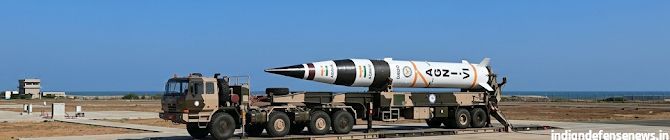
India's Defence Research and Development Organisation (DRDO) has successfully tested the Kusha long-range air defence missile system, a significant milestone in indigenous missile development often compared to Russia's S-400. Under Project Kusha, three surface-to-air missile variants are being developed with ranges of 150 km (M1), 250 km (M2), and 350 km (M3), primarily designed to engage aircraft, stealth fighters, cruise missiles, and drones rather than ballistic missiles. Ballistic missile defence will be handled by a separate dedicated BMD shield, which DRDO has already demonstrated capability for in both endo-atmospheric and exo-atmospheric interception domains. Lessons drawn from Iran's strikes on Saudi Arabia and the UAE, which exposed critical vulnerabilities in advanced US Patriot and THAAD systems, have reinforced India's commitment to building a layered, integrated, and redundant air defence architecture under the broader Mission Sudarshan Chakra. Prime Minister Modi has set a 2035 deadline for this comprehensive national shield, which will integrate interceptor missiles, advanced radars, sensors, command centres, and directed energy weapons across India's vast territory.
Key Takeaways
- 1. **Kusha is not a ballistic missile interceptor** — it is designed for aerial threats like aircraft, cruise missiles, stealth fighters, and drones, while a separate BMD system handles ballistic missile defence
- 2. **Three-tiered missile architecture** under Project Kusha (150 km, 250 km, and 350 km range variants) will form the backbone of India's layered long-range surface-to-air defence capability
- 3. **Global conflict lessons are shaping India's strategy** — failures of Patriot and THAAD systems against Iranian strikes have highlighted the necessity of redundant, multi-layered integrated air defence networks
- 4. **Mission Sudarshan Chakra represents India's strategic ambition** to build a nationally comprehensive defence shield comparable to the US "Golden Dome" or Israel's "Iron Dome," with a target completion of 2035
- 5. **India already possesses foundational defence technologies**, including quick reaction SAMs, very short-range air defence systems, a tested 30-kilowatt laser-based directed energy weapon, and proven BMD interception capabilities in multiple atmospheric domains