China and Russia Complete Their Annual Bilateral Maritime Military Drill

Summary
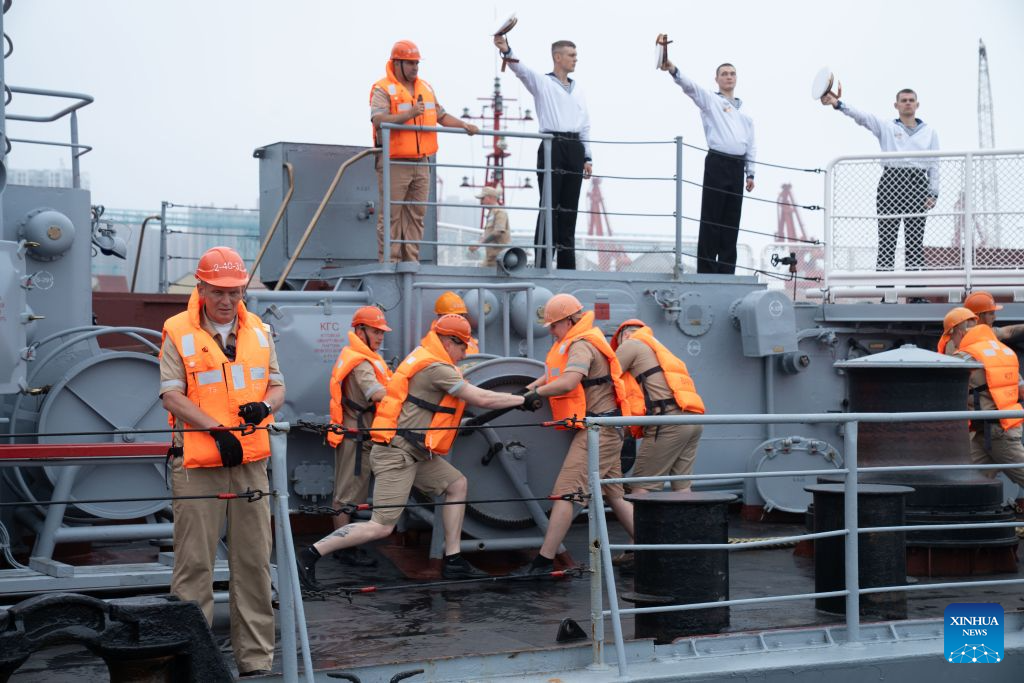
The twelfth edition of the China-Russia "Joint Sea" naval exercise series concluded on July 13, 2026, at the military port of Qingdao, Shandong Province, having commenced on July 6. The exercise involved ten combined naval assets across surface, underwater, aerial, and support categories from both nations, with operations centered on the theme of "jointly countering maritime security risks." During the exercise, participating forces conducted a range of sophisticated combat-oriented activities, including joint reconnaissance, anti-air and anti-missile defense, anti-surface strikes, and joint submarine rescue operations, all designed to simulate realistic maritime and aerial combat environments. Beyond sea operations, the harbor phase included tabletop simulations, professional seminars, and vessel tours, reinforcing both operational coordination and bilateral relations. Notably, upon conclusion of the drills, elements of both naval forces departed for the Pacific Ocean to conduct joint patrol operations, extending the strategic reach of the exercise beyond its immediate training objectives.
Key Takeaways
- 1. **Deepening Strategic Partnership:** The exercise represents the twelfth consecutive iteration since 2012, demonstrating a sustained and institutionalized Sino-Russian military relationship with growing operational maturity and interoperability.
- 2. **Power Projection Beyond Exercise:** The deployment of joint naval forces to the Pacific for patrol missions following the exercise signals a deliberate and coordinated effort to project combined military power into strategically significant waters.
- 3. **Advanced Combat Capabilities Demonstrated:** Live-fire and live-force drills encompassing anti-air, anti-missile, anti-surface, and submarine rescue operations indicate a high level of tactical sophistication and combat readiness between the two forces.
- 4. **Strategic Messaging and Regional Implications:** The exercise's framing around "countering maritime security risks" and "safeguarding regional peace and stability" serves as indirect strategic signaling toward regional rivals and Western naval powers, particularly in the Indo-Pacific.
- 5. **Enhanced Military Trust and Crisis Management:** Chinese military leadership emphasized that the exercise strengthens strategic mutual trust and improves the two nations' joint capacity to manage maritime crises, highlighting the exercise's role in long-term defense alignment.