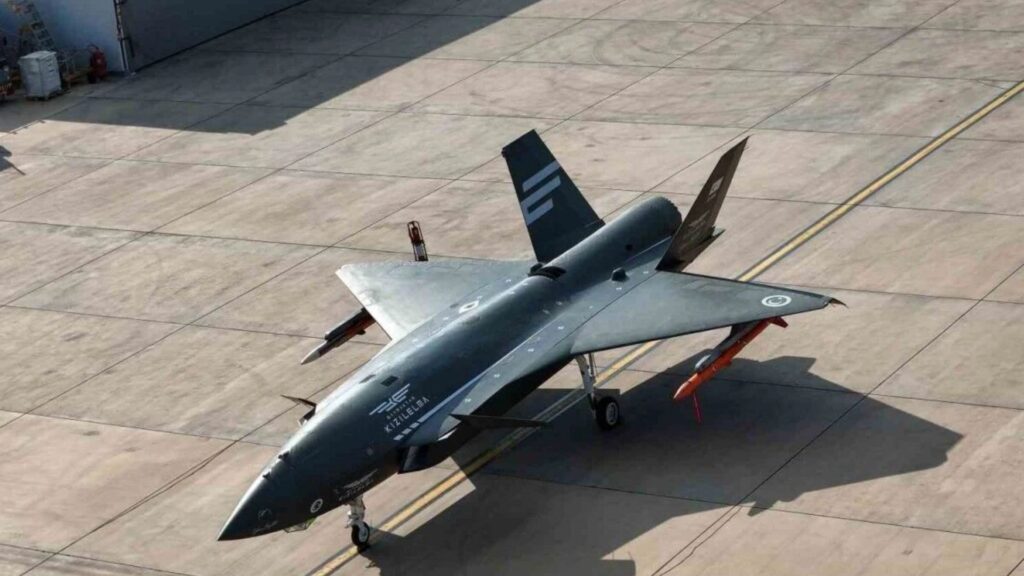
Turkey's Homegrown Turbofan Engine Aims to Eliminate a Critical Dependency for the KIZILELMA Unmanned Combat Aircraft

Summary
TUSAŞ Engine Industries (TEI) CEO Mahmut F. Akşit has announced that the company's domestically developed TF6000 turbofan engine will be delivered to both Baykar and TUSAŞ for pre-integration testing in early 2027, representing a significant milestone in Turkey's push for propulsion independence. The TF6000, rated at approximately 6,000 lbf of thrust, is intended to serve as the primary powerplant for two of Turkey's premier unmanned combat aircraft programs — the TUSAŞ ANKA-3 and Baykar's Bayraktar KIZILELMA — both of which currently rely on Ukrainian-sourced Ivchenko-Progress engines whose supply chains have been severely disrupted by the ongoing war. TEI is also developing an afterburning variant, the TF10000, capable of approximately 10,000 lbf with afterburner, specifically to support a planned supersonic version of the KIZILELMA. The strategic urgency of this development has been amplified by Baykar's agreement at SAHA 2026 to supply Indonesia with up to 60 KIZILELMA aircraft, making a reliable domestic engine source commercially and operationally critical. While the TF6000 successfully ran publicly at Teknofest 2025, reaching near its thrust target, actual flight integration remains contingent on the outcomes of the 2027 pre-integration testing phase.
Key Takeaways
- 1. **Supply Chain Vulnerability Addressed:** Turkey's current dependence on Ukrainian Ivchenko-Progress engines for its KIZILELMA and ANKA-3 programs represents a critical strategic chokepoint, which the TF6000 is specifically designed to eliminate by providing a fully domestic propulsion solution.
- 2. **Milestone Timeline Established:** The planned delivery of TF6000 prototypes to Baykar and TUSAŞ in early 2027 for pre-integration testing marks a concrete, time-bound commitment, though actual flight readiness remains conditional on successful testing outcomes.
- 3. **Export Implications Raise the Stakes:** Baykar's deal to supply up to 60 KIZILELMA aircraft to Indonesia significantly elevates the importance of a dependable domestic engine, as foreign customers would require assured and uninterrupted powerplant supply chains free from geopolitical disruptions.
- 4. **Supersonic Ambitions Supported:** The development of the afterburning TF10000 variant signals Turkey's intent to field a supersonic version of the KIZILELMA, expanding its unmanned combat aircraft capabilities into a higher-performance tier with meaningful offensive and strategic deterrence implications.
- 5. **Broader Defense-Industrial Significance:** The TF6000 program is part of Turkey's comprehensive effort to achieve full-spectrum propulsion independence — spanning fighter jets (TF35000 for KAAN), helicopters, warships, and unmanned platforms — with TEI positioning the TF6000's core architecture as a foundation for marine gas turbines, turboshafts, and turbine generators.