Trump Announces Plans to Remove CAATSA-Based Sanctions Against Türkiye

Summary
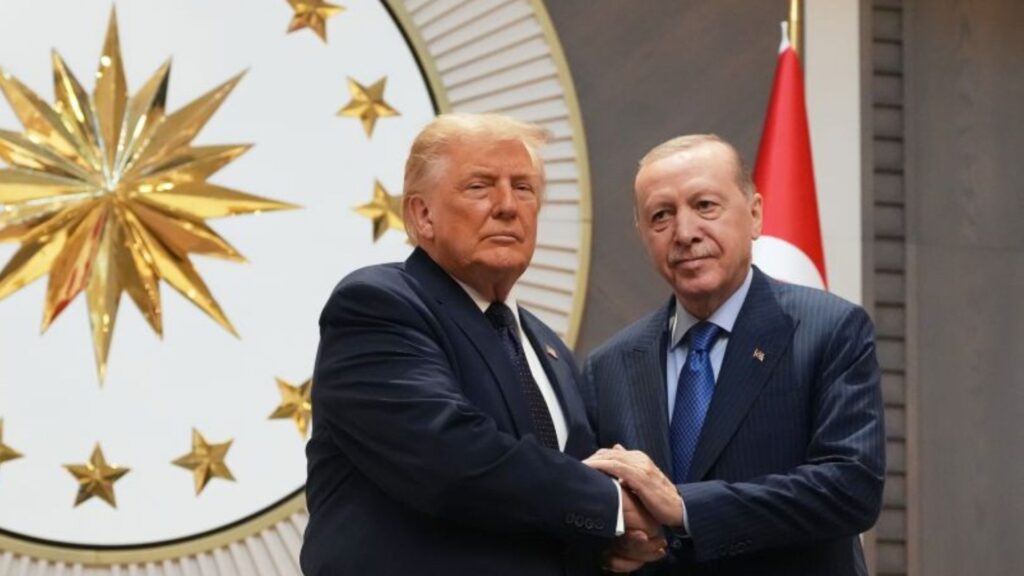
At the NATO summit held in Ankara on 7 July 2026, US President Donald Trump announced his intention to lift the CAATSA sanctions that were imposed on Türkiye in December 2020 following Ankara's acquisition of the Russian S-400 air defence system, and indicated he would consider reinstating Türkiye into the F-35 fighter jet program. However, translating these statements into concrete policy changes faces significant legal hurdles, as CAATSA is a federal statute requiring either a presidential waiver or Congressional action, while Türkiye's re-entry into the F-35 program is further complicated by a 2020 US law mandating certification that Ankara no longer possesses or operates the S-400. The most immediate practical benefit of easing sanctions would likely be access to General Electric F110 engines critical to Türkiye's domestically developed KAAN fighter jet, which Erdoğan specifically flagged as an area where he expects positive movement from Trump. Beyond direct military hardware, warmer US-Türkiye relations could unlock re-export licensing approvals for Turkish defence systems containing US-origin components, with the stalled Pakistan T129 ATAK helicopter deal — previously blocked over US engine re-export refusals — cited as the most prominent example of what could be revisited. Overall, while Trump's remarks represent a meaningful diplomatic reset after years of frozen relations, actual outcomes will be determined by US legal processes and case-by-case licensing decisions rather than summit-level statements alone.
Key Takeaways
- 1. **Legal barriers remain substantial** — lifting CAATSA sanctions requires either a presidential waiver or Congressional action, and F-35 reintegration demands formal certification that Türkiye has divested itself of the S-400 system, which Ankara has not done
- 2. **KAAN fighter program stands to benefit most immediately** — access to GE F110 engine deliveries and licences is the most actionable near-term outcome of improved US-Türkiye relations, sustaining KAAN's early production until Türkiye's indigenous TF35000 engine matures
- 3. **Re-export licensing could be a strategic game-changer** — a more permissive US stance toward Türkiye's defence exports could revive major stalled deals, most notably the $1.5 billion Pakistan T129 ATAK helicopter contract that collapsed over US engine re-export refusals, demonstrating how Washington uses licensing as a geopolitical lever
- 4. **The S-400 remains the central unresolved obstacle** — Trump downplayed the system's significance, but US law has not changed, and Türkiye's retention of the S-400 continues to legally block full normalisation of the defence relationship, including F-35 re-entry
- 5. **Strategic tone shift carries real but limited weight** — the diplomatic reset signals reduced hostility and opens negotiating space across multiple files including F-16 Block 70 and SAMP/T acquisitions, but concrete military and industrial benefits will depend on deliberate legal and bureaucratic processes rather than political goodwill alone