Turkey's Tayfun Block-3 Achieves Milestone as the Country's Inaugural Ballistic Missile Capable of Targeting Ships at Sea

Summary
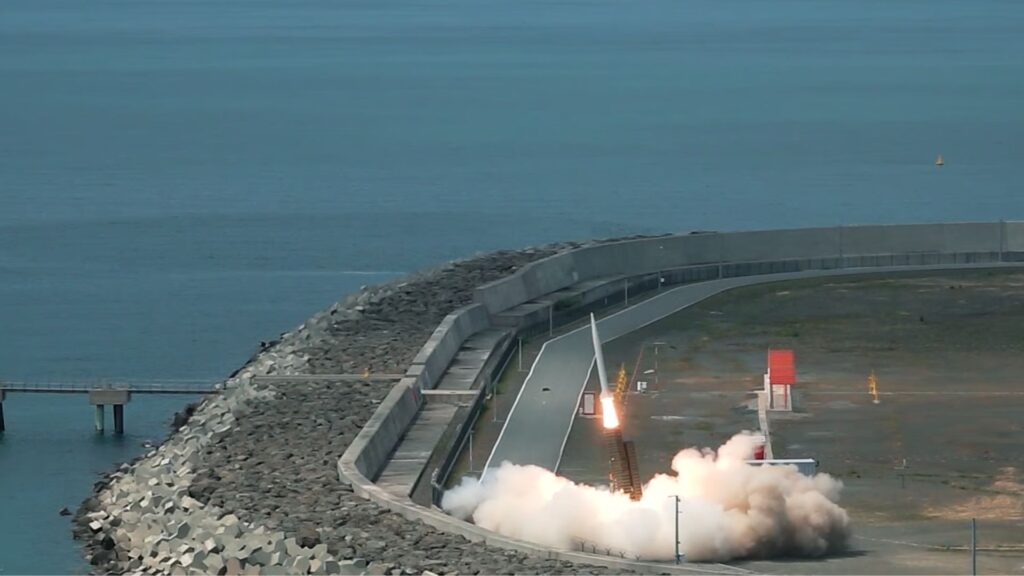
Roketsan successfully test-fired the Tayfun Block-3 ballistic missile on July 4, 2026, striking a moving unmanned surface vessel in the Black Sea at hypersonic speed, marking Turkey's first demonstration of an anti-ship ballistic missile (ASBM) capability. Unlike earlier Tayfun variants that rely solely on pre-programmed coordinates, the Block-3 incorporates a terminal seeker head that autonomously acquires and tracks moving targets during the final phase of descent, effectively transforming a land-attack weapon into a ship-killing missile. This advancement places Turkey in rare company alongside China, Iran, and Pakistan as fielders of ASBMs, weapons that threaten warships at considerable distances with minimal warning time and a steep, high-speed attack profile that severely challenges shipboard defenses. The Block-3 is supported by a broader sensor and network architecture, including drones, coastal radars, and an over-the-horizon radar integrated into the Barbaros coastal-defense network, enabling midcourse target updates via datalink for continuous tracking of maneuvering vessels. Roketsan continues to expand the Tayfun family with the larger Block-4 variant targeting speeds above Mach 5, while the company's export revenues exceeded $750 million in 2025, reflecting Turkey's growing ambitions as a self-reliant and increasingly competitive defense exporter.
Key Takeaways
- 1. **Strategic Deterrence Milestone:** The Tayfun Block-3 gives Turkey a land-based capability to threaten naval vessels far from shore, significantly enhancing coastal and maritime deterrence by denying adversaries freedom of movement in surrounding sea areas, particularly the Black Sea and Eastern Mediterranean.
- 2. **Exclusive Club Membership:** Turkey joins only China, Iran, and Pakistan in operationally pursuing anti-ship ballistic missiles, representing a major leap in the country's strategic military posture and placing it among a very limited group of nations with this sophisticated capability.
- 3. **Advanced Seeker Technology:** The Block-3's terminal guidance system, likely optical given the detachable heatshield on the nosecone, enables autonomous target acquisition against maneuvering ships during hypersonic descent, overcoming a critical technical barrier that distinguishes ASBMs from conventional land-attack ballistic missiles.
- 4. **Layered Coastal Defense Integration:** When combined with the low-flying Atmaca cruise missile, the Block-3 creates a complementary high-trajectory and low-trajectory threat pairing within Turkey's Barbaros coastal defense network, complicating enemy countermeasures and forcing adversaries to defend against multiple simultaneous attack profiles.
- 5. **Defense Industry Growth and Export Ambitions:** Roketsan's revenues surpassing $2 billion with $750 million in exports in 2025, and the concurrent development of the even larger Block-4 variant, underscore Turkey's strategic intent to leverage each technological milestone as both a national security asset and a commercial export opportunity in the global defense market.