Pakistani Armed Forces Report 42 Casualties Following Series of Coordinated Militant Strikes Across Balochistan Over Four Days

Summary
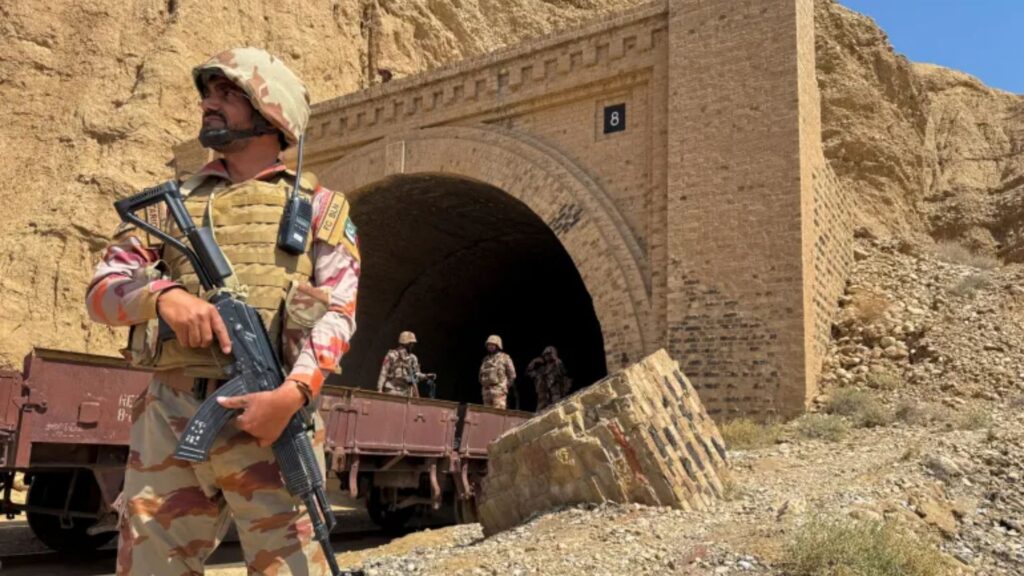
Pakistan's military, through its Inter-Services Public Relations (ISPR) spokesperson Lieutenant-General Ahmed Sharif Chaudhry, announced that 42 people — comprising 4 civilians, 27 police officers, and 11 soldiers — were killed across Balochistan between July 4-8 in three distinct militant attacks, while security forces reportedly neutralized 54 militants during the engagements and subsequent operations. The most devastating incident occurred in Ziarat district, where an assault on a police post guarding the Mangi Dam pumping station resulted in 27 police fatalities, with the military deliberately refraining from deploying aerial assets to protect hostages taken during the prolonged standoff. A separate ambush on an army convoy along the N-25 highway in Lasbela district, attributed to the Baloch Liberation Army (BLA), claimed 11 military lives, while a third attack near Quetta targeting civilians was attributed to the Tehreek-e-Taliban Pakistan (TTP). Pakistani military leadership framed the coordinated wave of violence as an externally orchestrated campaign, directly naming India as the architect and alleging that militants operate from Afghan Taliban-controlled territory, claims that both Kabul and New Delhi have firmly denied. Independent verification of casualty figures remains challenging due to restricted media access in Balochistan, and militant groups' own tallies have historically diverged significantly from official Pakistani accounts.
Key Takeaways
- 1. **Multi-Front Security Crisis:** Pakistan simultaneously faces threats from two distinct militant organizations — the TTP and BLA — operating across Balochistan, suggesting a complex and potentially coordinated security challenge that strains military and police resources across multiple theatres.
- 2. **Strategic Infrastructure Vulnerability:** The targeting of the Mangi Dam pumping station highlights militants' deliberate strategy of attacking critical civilian infrastructure and its security personnel, which can maximize casualties and create prolonged standoff situations that constrain military response options.
- 3. **External Actor Allegations Escalate Tensions:** Pakistan's explicit naming of India as the orchestrator of the militant campaign, combined with allegations of Afghan Taliban complicity in harboring militants, significantly raises regional diplomatic and strategic stakes, potentially influencing Pakistan's foreign and military policy decisions.
- 4. **Information Warfare and Accountability Gap:** The sharp divergence between official Pakistani casualty figures and militant groups' own claims — exemplified by the BLA's assertion of 82 military deaths versus a far lower official count in a prior attack — underscores a persistent information warfare dimension to the conflict, with restricted provincial access preventing independent verification.
- 5. **Western Frontier Under Compounding Pressure:** With nearly 200 Pakistani air strikes and shelling actions recorded since cross-border fighting with Afghanistan intensified in late February, Pakistan's military is managing simultaneous internal insurgency and external border conflict, raising serious concerns about strategic overextension and long-term operational sustainability.