China Achieves Milestone in Reusable Rocket Technology with Successful Long March 10B Launch and First-Stage Recovery

Summary
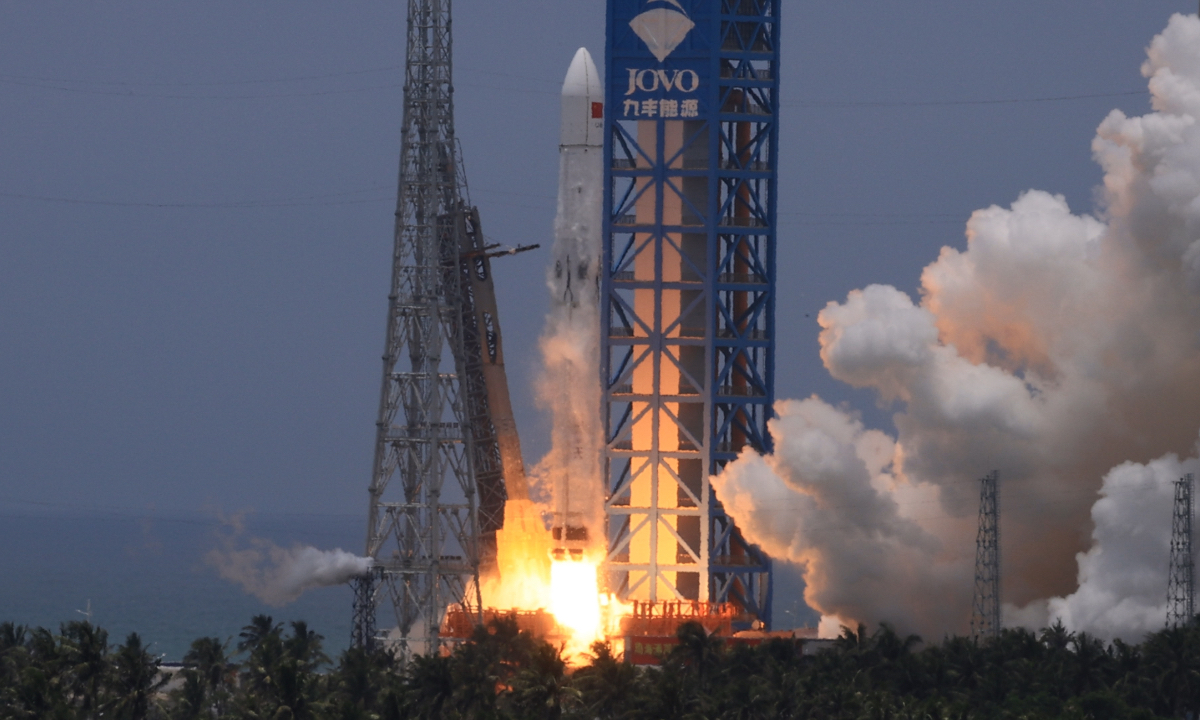
On July 10, 2026, China marked a historic achievement in its space program when the Long March 10B carrier rocket successfully completed its maiden flight from the Hainan commercial space launch site, delivering its satellite payload to the designated orbit. Approximately six minutes after stage separation, the rocket's first stage executed a controlled vertical descent and was captured using a net-based recovery system on an offshore platform located over 300 kilometers from the launch site. This mission represents two simultaneous world records: China's first successful controlled recovery of a launch vehicle first stage, and the world's first-ever net-based recovery of a launch vehicle. Developed by the China Academy of Launch Vehicle Technology (CALT) under the China Aerospace Science and Technology Corporation (CASC), the Long March 10B features a 5-meter diameter, two-stage tandem configuration powered by liquid oxygen/kerosene in its first stage and liquid oxygen/methane in its second stage, with a liftoff thrust of approximately 890 metric tons. This breakthrough formally marks China's entry into the rocket recovery era and is expected to significantly accelerate the country's space access and payload return capabilities.
Key Takeaways
- 1. **Strategic Space Capability Leap:** China's successful first-stage rocket recovery represents a transformational advancement in its space launch infrastructure, directly challenging US commercial space dominance, particularly SpaceX's reusable rocket technology
- 2. **Novel Recovery Technology:** The world's first net-based offshore rocket recovery method demonstrates China's development of an independent and potentially superior recovery approach distinct from existing Western methodologies
- 3. **Military and Dual-Use Implications:** With a 16-metric-ton low-Earth orbit payload capacity in reusable configuration, the Long March 10B significantly enhances China's ability to rapidly and cost-effectively deploy military satellites and space-based assets
- 4. **Cost and Operational Efficiency:** Reusable launch vehicle technology will dramatically reduce per-launch costs, enabling China to accelerate satellite constellation deployment, surveillance capabilities, and potential anti-satellite or space deterrence operations
- 5. **Industrial and Technological Sovereignty:** Developed entirely under CASC's domestic framework, this achievement underscores China's growing self-sufficiency in advanced aerospace engineering, reducing vulnerability to foreign technology restrictions