Understanding Pakistan's Potential Fatah-5 Missile and What the Fatah-2's Development Reveals About Future Ballistic Capabilities

Summary
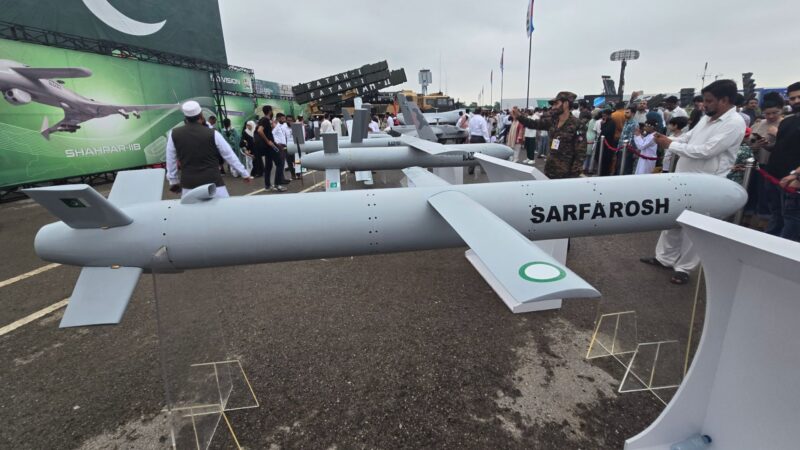
Pakistan's Army Rocket Force Command (ARFC) has established itself as the primary operator of the country's conventional surface-to-surface precision-strike systems, fielding a diverse arsenal that includes guided artillery, quasi-ballistic missiles, and both supersonic and subsonic cruise missiles. A Pakistan Army officer confirmed to Geo News that a new system designated "Fatah-5" has already undergone testing, suggesting the ballistic missile sub-family is expanding beyond the existing Fatah-2 and its naval anti-ship variant, the SMASH. The Fatah-2, built on a standardized 600mm diameter airframe with a 400km range and 365kg warhead, has been deliberately repurposed into the SMASH anti-ship ballistic missile, demonstrating Pakistan's strategic use of common platforms to achieve production efficiency and cost distribution. This shared-platform approach allows NESCOM to sustain high-output production lines by satisfying demand from both the ARFC's land-attack requirements and the Pakistan Navy's anticipated shore-based anti-ship missile strategy. Analysts suggest these developments collectively indicate that Pakistan is pursuing a deliberate conventional ballistic missile strategy centered on scalable production, standardized designs, and incremental range extension.
Key Takeaways
- 1. Pakistan's ARFC is systematically building a layered conventional precision-strike capability spanning multiple missile categories and ranges, reducing reliance on nuclear deterrence for battlefield scenarios
- 2. The confirmation of Fatah-5 testing signals Pakistan's intent to continuously extend ballistic missile range, likely pushing beyond the Fatah-2's current 400km reach
- 3. The shared airframe between Fatah-2 and SMASH reflects a deliberate industrial strategy to maximize production scale, reduce per-unit costs, and potentially enable foreign export opportunities
- 4. Pakistan is developing a credible anti-ship ballistic missile capability through SMASH, positioning the Navy for shore-based maritime denial operations that could significantly complicate adversary naval maneuvers
- 5. NESCOM's standardized platform approach suggests Pakistan is prioritizing long-term sustainment and ammunition depth, ensuring the ARFC maintains credible conventional deterrence stockpiles during prolonged conflict scenarios